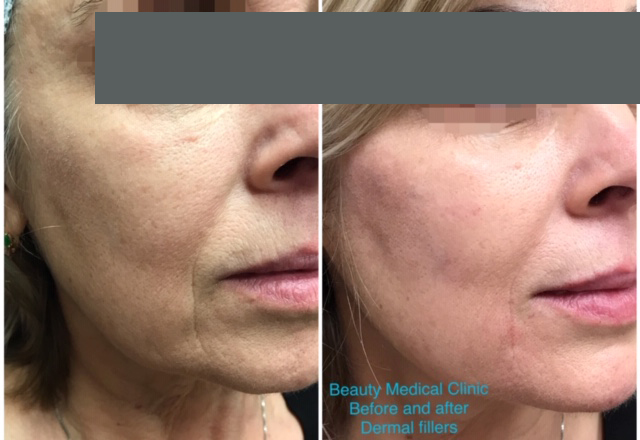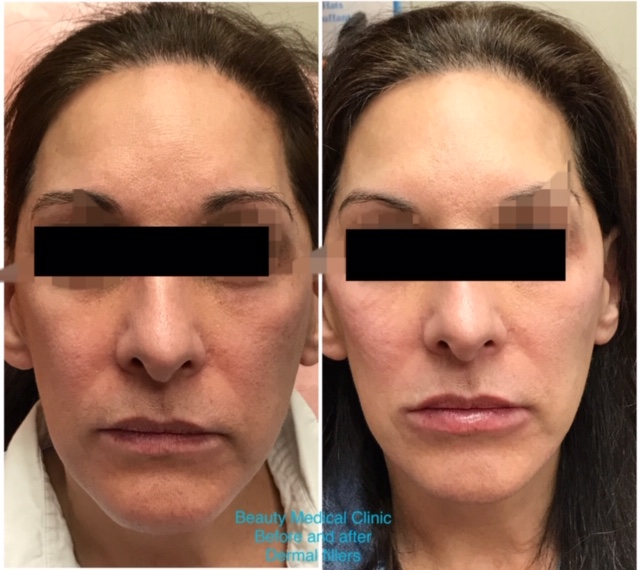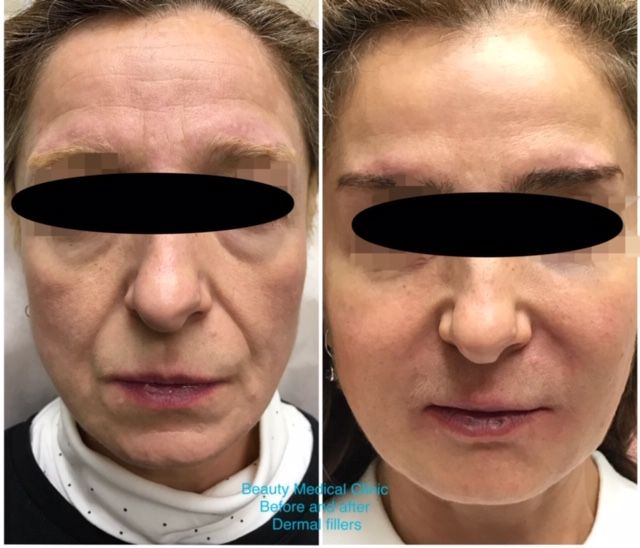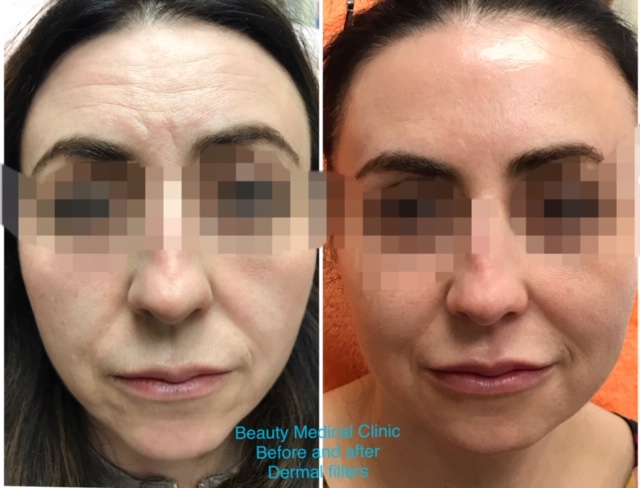


Dermal Fillers
Hyaluronic Acid (HA) based fillers are most effective and safe injectable fillers for the treatment of lines, creases and provide a ‘soft’ look that replaces the fullness of the skin that’s lost over time. It is a safe effective way to smooth out the natural form of the face to give skin a younger healthier appearance. The treatment is great for ‘face sculpting’, and is effective in the following areas:
- Cheeks
- Midface
- Grooves beside the nose (Naso-Labial folds)
- Chin
- Lips
- Jaw line
You can achieve a natural looking face lift without invasive surgery, by using right fillers in the right area.
WHAT IS HYALURONIC ACID
Hyaluronic acid (HA) is a substance that is naturally present in the human body. Although Hyaluronic Acid (HA) can be found in most every cell in the body, it is found in the greatest concentrations (almost 50%) in the skin tissue. It is found in both the deep underlying dermal areas as well as the visible epidermal top layers.
Young skin is smooth and elastic and contains large amounts of HA that helps keep the skin stay young and healthy.
The HA provides continuous moisture to the skin by binding up to 1000 times its weight in water. As well Hyaluronic Acid provides volume and fulness to the skin. With age, the ability of the skin to produce HA decreases.
As we age, our skin thins out, stretches and loses elasticity causing lines, wrinkles, and creases to become more visible. Everyday acts such as frowning and smiling highlight lines and wrinkles. Although these changes in our skin are impossible to stop, there are ways to slow the aging process and hide its effects.
To the rescue come Dermal Fillers and Skin Boosters, based on HA.
Hyaluronic acid has been proven to last longer than fat and collagen injections. It maintains its shape using the body’s own moisture. What results is a longer-lasting, youthful, facial appearance.
Since the Hyaluronic Acid in Dermal Fillers (Juvederm, Emervel, Restylane) is not made from animals, there is no risk of transmitting diseases from animals or eliciting allergic reactions in patients who are sensitive to common foods, such as beef, chicken and eggs.